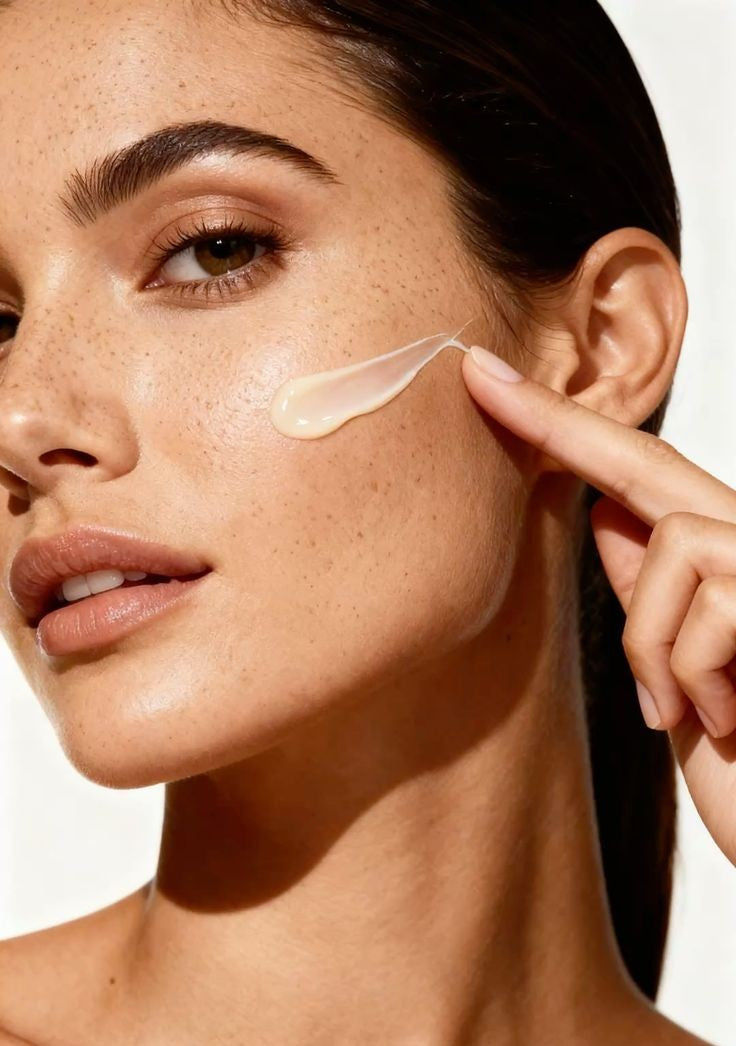
What Is Ectoin in Skincare? The Desert-Born Ingredient Behind 2026's Barrier-Repair Revolution
Posted in Skin School • Updated June 2026
You've probably noticed a strange new word creeping onto your favorite skincare labels: ectoin. It's tucked into barrier creams, hydrating serums, and post-procedure recovery products. Korean labs are quietly adding it to next-generation formulas. And the search volume? Up 86% in recent months and climbing fast.
Yet most people still have no idea what ectoin is, what it does, or why it might be the most important hydration and barrier-repair ingredient since hyaluronic acid.
This is the deep dive — the science, the clinical evidence, the K-beauty angle, and the products in your routine that will work best alongside it.
What Is Ectoin?
Ectoin is a natural amino acid derivative produced by a very specific class of bacteria called extremophiles — microbes that survive in some of the harshest environments on Earth. Think salt lakes in the Sahara, geothermal vents, and Arctic tundra.
These bacteria had a problem: they needed to hold onto water and protect their cellular machinery while being baked, frozen, salted, and irradiated by UV light. Their solution was to produce ectoin, a tiny molecule that forms a protective hydration shell around proteins and cell membranes, keeping them stable under extreme stress.
When scientists realized that human skin cells face their own version of "extreme stress" every day — pollution, UV radiation, blue light, over-exfoliation, dry indoor air — applying ectoin topically turned out to deliver remarkable benefits. The same molecule that lets bacteria survive in the desert can help your skin survive a Korean winter, an LA pollution day, or a week after a chemical peel.
It's classified as an extremolyte, and the cosmetic industry is finally catching up to what wound-healing dermatologists have known for years.
How Ectoin Works on Your Skin
Where most hydrating ingredients add water to the skin or trap water on the surface, ectoin works on a deeper level. It binds water molecules into an organized structure around your skin cells, creating what's called a hydro-complex — a stable shell of water that:
- Surrounds and stabilizes cell membranes
- Protects proteins and enzymes from environmental damage
- Reduces transepidermal water loss (TEWL) by up to 24%
- Calms inflammatory pathways triggered by UV and pollution
- Strengthens the skin barrier from within
Crucially, this protective effect persists. One clinical study found that hydration levels stayed elevated for up to 7 days after stopping ectoin treatment — something almost no other humectant can claim.
What the Clinical Research Actually Shows
This is where ectoin separates itself from typical "trending ingredient" hype. The clinical evidence is unusually strong for a cosmetic ingredient:
- Hydration: At just 1% concentration, ectoin increased skin hydration by up to 200% compared to placebo
- Barrier function: Transepidermal water loss dropped by nearly 24% in studies on dry skin
- Eczema (atopic dermatitis): Topical formulations of 5.5–7% ectoin reduced dry skin in moderate-to-severe cases from 53% to 12% of patients in one trial, with itching reduced by 71%
- Anti-inflammatory: A 20-person clinical study found 1% ectoin cream was comparable in effectiveness to 0.25% hydrocortisone at calming surfactant-irritated skin
- Post-procedure recovery: 5% ectoin applied twice daily delivered the best results for post-laser skin recovery
For context: most "trending" skincare ingredients have a handful of in-vitro studies and a lot of marketing. Ectoin has decades of biochemistry research and clinical trials on actual human skin, including pediatric eczema studies.
Ectoin vs. Hyaluronic Acid: What's the Difference?
If you're already using hyaluronic acid, you might wonder why you'd need another hydrating ingredient. Here's the honest comparison:
Hyaluronic acid is a large sugar molecule that holds water in the outer layers of your skin. It's an excellent humectant — but it works on the surface, and its effects fade once you stop applying it.
Ectoin is a much smaller molecule that incorporates into cellular structures. It doesn't just hold water; it organizes it around your cells in a protective shell. This means:
- Longer-lasting hydration (effects measurable up to 7 days after stopping)
- Environmental protection against UV, pollution, and blue light
- Anti-inflammatory action that HA doesn't have
- Barrier repair that goes beyond moisture retention
The good news: they're not competitors. Ectoin and hyaluronic acid pair exceptionally well together — HA hydrates the surface while ectoin stabilizes the cells underneath. The best 2026 K-beauty formulas combine both.
Why Korean Brands Are Quietly Adding Ectoin to Everything
K-beauty has always been barrier-first. Korean dermatology emphasizes prevention, protection, and repair over aggressive correction — the exact philosophy that ectoin embodies.
You'll start seeing ectoin appear in three places in Korean skincare:
- Barrier creams and ampoules — usually paired with ceramides, panthenol, or centella
- Next-generation sunscreens — leveraging ectoin's UV-defense properties on top of mineral or chemical filters
- Post-procedure recovery formulas — for skin recovering from microneedling, lasers, or aggressive actives
The Korean market is 2–3 years ahead of Western brands on barrier-repair innovation, and ectoin is the latest piece of that puzzle. Expect Korean dermatology brands to make ectoin a centerpiece of their 2026–2027 launches.
Who Should Use Ectoin?
Ectoin is one of the most universally tolerated active ingredients in skincare — meaning it works for almost everyone, but it shines hardest for specific concerns:
Especially valuable for:
- Compromised skin barriers — over-exfoliation, retinol burn, harsh-actives recovery
- Sensitive skin and rosacea-prone types — calming, non-reactive
- Eczema and atopic dermatitis — clinical-grade evidence
- Urban skin — pollution, blue light, environmental defense
- Post-procedure recovery — after peels, lasers, microneedling
- Dry climates or air-conditioned environments
Pairs especially well with:
- Retinol (buffers irritation)
- AHA/BHA exfoliants (reduces peeling and redness)
- Vitamin C (stabilizes effect)
- Hyaluronic acid (compounding hydration)
- Ceramides (barrier rebuild)
- Niacinamide (anti-inflammatory stacking)
Likely overkill for: young, healthy, oily skin with no barrier concerns. You're not going to ruin anything by using it, but you'll get more dramatic results from actives that target your specific concern (e.g., niacinamide for pores, BHA for oil).
How to Build an Ectoin Routine
You don't need to overhaul your routine. Ectoin is layer-friendly and stable across pH levels. Here's how to slot it in:
Morning (barrier-protective routine):
- Gentle cleanser
- Hydrating toner or essence
- Ectoin serum or barrier ampoule
- Hyaluronic acid serum (optional — compounds the effect)
- Moisturizer
- SPF 50+
Evening (barrier-repair routine):
- Oil cleanser → water cleanser
- Hydrating toner
- Ectoin serum
- Targeted treatment (retinol/PDRN/peptides — ectoin buffers irritation)
- Rich moisturizer or sleeping mask
Concentrations to Look For
- 0.5–1% ectoin: daily-use hydration and barrier support — most common in K-beauty formulas
- 1–3% ectoin: targeted barrier repair, used in dedicated serums
- 5–7% ectoin: clinical-grade post-procedure recovery, often prescribed by dermatologists
If a product lists ectoin near the top of the ingredient list (within the first 10 ingredients), you're likely getting a meaningful concentration.
K-Beauty Products That Pair Perfectly With Ectoin
While Korean brands are still in the early days of launching dedicated ectoin products globally, the existing K-beauty barrier-repair lineup creates an ideal foundation for an ectoin-powered routine. Here's what to stack with it:
For Barrier Repair: SKIN1004 Madagascar Centella Probio-Cica Enrich Cream
Built around fermented centella, ceramide NP, and TECA, this barrier cream is the perfect base for layering ectoin underneath. The probio-cica fermentation supports the same cellular stability ectoin enhances.
[Shop SKIN1004 Probio-Cica Enrich Cream →]
For Microbiome + Barrier: Haruharu Wonder Black Rice Probiotics Barrier Essence
Contains 5 ceramides, fermented black rice, galactomyces, and bifida ferment — postbiotic ingredients that work synergistically with ectoin's cellular protection. One of the strongest barrier-rebuilding essences in K-beauty.
[Shop Haruharu Wonder Black Rice Probiotics Barrier Essence →]
For Hydration Stacking: COSRX Hyaluronic Acid Intensive Cream
The textbook ectoin pairing. HA grabs water at the surface, ectoin organizes it deeper. This 3,000ppm HA cream is the most cost-effective HA layer to add.
[Shop COSRX Hyaluronic Acid Intensive Cream →]
For Calming + Anti-Inflammatory: Anua Heartleaf 80 Soothing Ampoule
80% heartleaf extract with panthenol and hyaluronic acid — calms inflammation through a different mechanism than ectoin (anti-inflammatory botanical vs. cellular stress reduction). They stack beautifully for sensitive or reactive skin.
[Shop Anua Heartleaf 80 Soothing Ampoule →]
For Repair After Actives: COSRX Advanced Snail 96 Mucin Power Essence
The classic K-beauty barrier-repair ingredient. Snail mucin works through a peptide-and-glycoprotein mechanism that's complementary to ectoin's cellular stabilization. Use both for skin recovering from retinol or BHA cycles.
[Shop COSRX Advanced Snail 96 Mucin Power Essence →]
What to Expect: Realistic Timeline
Ectoin works fast for hydration and slower for structural barrier repair. Here's what you'll likely notice:
- 15 minutes to 24 hours: skin feels softer, less tight, more hydrated
- 3–7 days: visible reduction in redness, irritation, and reactivity
- 2–4 weeks: stronger barrier function — your skin tolerates more, reacts less
- 8+ weeks: long-term resilience improvements, especially against environmental damage
The longevity of effect is what makes ectoin special. Even if you forget to apply for a few days, the cellular hydration remains elevated. Most actives need consistent daily use to maintain results.
Frequently Asked Questions
Is ectoin safe? Extremely. Ectoin is non-toxic, non-irritating, and has been studied extensively in pediatric eczema patients. Pregnancy- and breastfeeding-friendly (always consult your doctor on new products).
Is ectoin vegan? Yes. Cosmetic ectoin is produced through bacterial fermentation, not extracted from animals.
Can I use ectoin with retinol? Yes — and this is one of its best applications. Ectoin reduces the irritation and dryness retinol causes, making it possible to tolerate higher concentrations or more frequent application.
Can I use ectoin with vitamin C? Yes. Ectoin's stable molecular structure isn't affected by vitamin C's low pH.
Is ectoin the same as ectoine? Yes. They're alternate spellings of the same molecule (officially: 2-methyl-1,4,5,6-tetrahydropyrimidine-4-carboxylic acid, but no one needs to remember that).
What about hydroxyectoin? Hydroxyectoin is a closely related molecule with a slightly modified structure. It offers similar protective properties and is often used alongside ectoin in premium formulations.
Is ectoin better than ceramides? Different mechanisms. Ceramides rebuild the lipid layer of your barrier. Ectoin stabilizes cells and organizes water around them. The best barrier-repair routines use both.
How long does an ectoin product last on the shelf? Ectoin itself is exceptionally stable — it can withstand high temperatures and wide pH ranges. The product's shelf life depends more on the other ingredients in the formula.
The Bottom Line
Ectoin is the rare emerging ingredient that delivers on the hype — backed by decades of biochemistry research, real clinical trials on human skin, and a mechanism (cellular hydration shell + barrier repair) that complements almost every other active in your routine.
It won't replace hyaluronic acid, ceramides, or niacinamide. But it pairs with all of them, fills gaps that none of them address fully, and provides a level of environmental protection that's becoming essential as urban pollution, blue light exposure, and aggressive skincare routines stress our barriers more than ever.
Korean brands are just starting to feature it. The Western market is racing to launch ectoin products. If you build a strong barrier-repair foundation now using the K-beauty products that work synergistically with ectoin, you'll be perfectly positioned for the next generation of formulas that put this molecule front and center.
Browse our full collection of barrier-repair K-beauty essentials at Llusso →