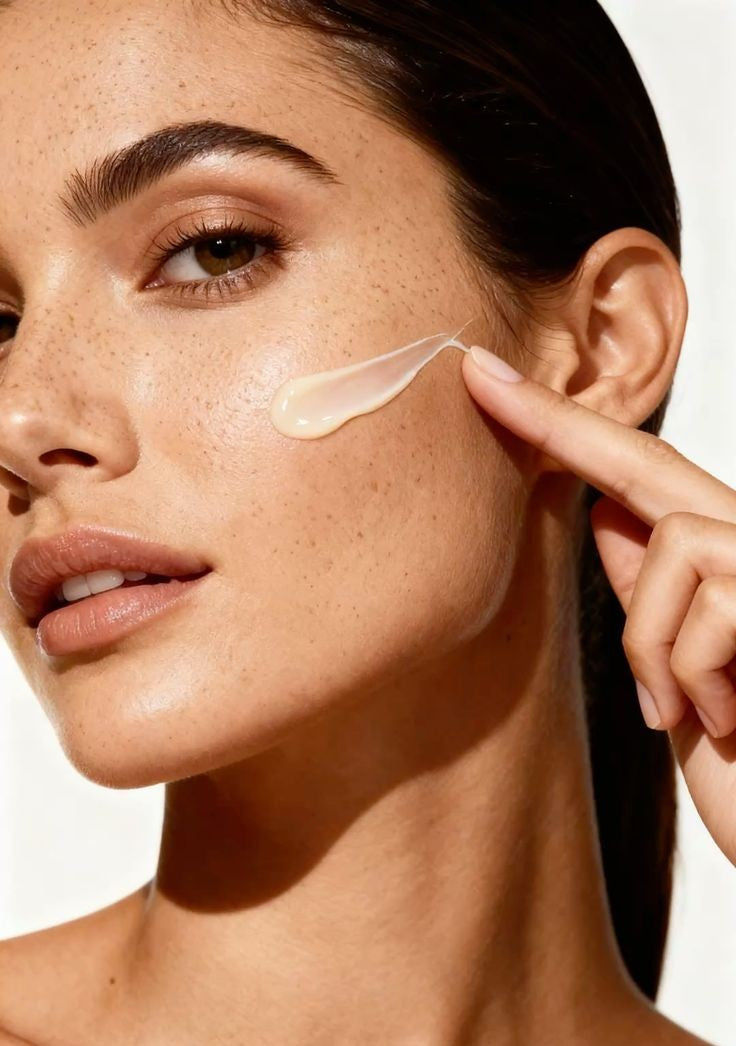
What Are Spicules? The "Liquid Microneedling" Skincare Trend Explained
Last updated: June 2026
Quick answer: Spicules (pronounced spik-yools) are microscopic, needle-shaped structures that form the skeleton of sponges — usually the freshwater sponge Spongilla lacustris — and on ingredient labels they appear as "Hydrolyzed Sponge." In skincare, they do two things: they physically exfoliate dead skin for an instant smoother, brighter look, and they create tiny microchannels in the skin's surface that help other active ingredients absorb more deeply. That's why they're nicknamed "liquid microneedling" or "microneedling in a bottle." The effect is real but much milder than a clinic treatment — spicule needles are around 0.2mm versus up to 2.5mm for professional microneedling. They cause temporary redness and a prickling tingle that usually settles within an hour, and they suit normal, combination, and oily skin best — not sensitive, compromised, or actively breaking-out skin. One caveat people often miss: spicules are derived from animals, so they're not vegan.
After PDRN (the salmon-DNA ingredient) dominated K-beauty, spicules are the next viral active — those "redness-then-glow" videos all over social media are spicule serums at work. Here's what they actually are, what the science says, and how to use them safely.
What are spicules, exactly?
Spicules are tiny, rigid, needle-like structures that make up the skeletal framework of sponges. In nature, they're what give a sponge its shape. For skincare, they're harvested, purified, and refined into a powder of microscopic needles — typically between 100 and 300 micrometres long, often hollow.
A few specifics worth knowing, because most general explanations get them wrong:
- Source species: Most cosmetic spicules come from the freshwater sponge Spongilla lacustris, not bath sponges. Much of the early lab research used marine Haliclona species.
- Composition: They're built from silica (silicon dioxide) and/or calcium carbonate — the same family of material as glass and chalk, which is why they're rigid enough to penetrate skin.
- INCI name: On a product's ingredient list, look for "Hydrolyzed Sponge" (sometimes just "Sponge"). That's your spicule indicator.
How do spicules work?
Spicules work through two mechanisms at once:
1. Physical exfoliation. As you massage a spicule product in, the microscopic needles slough off dead, dull surface cells. This is what creates the immediate smoother, brighter result people notice on first use.
2. Microchannel delivery. The needles penetrate very superficially — only about 0.1 to 0.3mm into the stratum corneum (the skin's outer protective layer). That's not deep enough to bleed, but it's enough to create thousands of tiny temporary channels that let serums and actives pass through the barrier and absorb more effectively. The channels close again as your skin naturally repairs over the following hours.
This is why spicules are often paired with, or layered under, ingredients like hyaluronic acid, niacinamide, vitamin C, peptides, or PDRN — the spicules act as a delivery booster for whatever you apply.
Why are spicules called "liquid microneedling"?
Because they mimic the mechanism of microneedling — creating microchannels to trigger renewal and boost absorption — but in a topical serum or essence instead of a tool. The key difference is scale and depth:
| Spicules ("liquid microneedling") | Clinical microneedling | |
|---|---|---|
| Format | Serum, essence, or patch you apply at home | In-office tool or derma roller |
| Needle depth | ~0.2mm (very superficial) | Up to 2.5mm or more |
| Downtime | Minimal — brief redness/tingling | Redness, possible peeling for days |
| Collagen effect | Mild | Significant |
| Risk level | Lower (used correctly) | Higher; needs proper hygiene |
| Cost | Affordable, at-home | Higher, professional |
The honest takeaway: spicules give you a gentler, at-home echo of microneedling, not a replacement for the clinical version.
What are the benefits of spicules?
Based on how they exfoliate and enhance absorption, spicule products are used to:
- Instantly smooth texture and add brightness (from exfoliation)
- Boost the absorption and effectiveness of other actives
- Help fade dark spots, post-acne marks, and uneven tone over time
- Soften the look of fine lines by encouraging cell turnover
- Refine the appearance of pores and rough texture
What does the science actually say?
Here's where honesty matters, because the marketing often runs ahead of the evidence. Spicules are relatively new to dermatology and the robust research is still limited.
Most existing studies are animal studies — frequently using Haliclona sponge spicules on pig skin — which found that the microchannels improved the uptake of large molecules like RNA and growth factors. Human data is sparse. The most-cited human study is a small Korean trial of about 20 participants with fine lines around the eyes: those who used spicules together with growth factors saw improvements in wrinkles and skin density compared to growth factors alone. But that study didn't control for participants' other skincare or lifestyle habits, so the results should be read with caution.
Reported side effects across studies were mild and short-lived — mostly redness and a prickling sensation that resolved within minutes. So the early signals are promising for exfoliation and absorption, but the dramatic "rebuild your skin" claims aren't yet backed by strong human evidence.
Who should (and shouldn't) use spicules?
Good fit: normal, combination, and oily skin that already tolerates active ingredients well. People wanting smoother texture, better product absorption, or help with dullness and uneven tone.
Should avoid or be very cautious:
- Sensitive, reactive, or rosacea-prone skin — the physical disruption can trigger irritation
- Compromised or already-damaged barriers — spicules add stress a healing barrier doesn't need
- Active acne or breakouts — puncturing inflamed skin can spread bacteria and worsen acne; wait until skin has cleared
- Anyone avoiding animal-derived ingredients — spicules are not vegan
How to use spicules safely
- Patch test first, especially if your skin is reactive.
- Start low-frequency — once or twice a week — and build up only if your skin stays comfortable.
- Don't over-massage. More pressure means more disruption and more irritation, not better results.
- Layer your active or hydrator on top to take advantage of the absorption boost.
- Moisturize generously afterward to support the barrier.
- Wear SPF every morning — freshly exfoliated skin is more sun-sensitive.
- Don't stack spicules with strong acids or retinoids in the same routine while you're starting out; that's a fast track to over-exfoliation.
- Expect mild redness and prickling. Normal if it settles within an hour. If it lingers, burns, or swells, the product isn't right for your skin.
[Product tie-in: link your spicule essence/serum here, plus the barrier moisturizer and SPF you'd recommend pairing with it.]
Which brands make spicule products?
The most established names in spicule skincare are VT Cosmetics (their Reedle Shot essence is the viral one that put spicules on the map) and Medicube, both of which have worked with the ingredient in the Korean market for years. Newer entrants like Rael have introduced spicule serums and spot patches coated with soothing actives. When shopping, check the label for "Hydrolyzed Sponge" and look for formulas that pair spicules with calming ingredients like centella, ectoin, allantoin, or PDRN to offset irritation.
Frequently asked questions
What does "liquid microneedling" mean? It's the K-beauty nickname for spicule-based serums. The spicules create microchannels in the skin like a microneedling tool would, but in a topical format — no separate device and far less depth.
Do spicules actually work? They reliably exfoliate and boost the absorption of other ingredients, which gives an immediate smoother, brighter look. Stronger claims about collagen and wrinkles rest on limited, mostly animal-based research, so manage expectations.
Are spicules safe? For normal-to-oily skin that tolerates actives, used correctly and not too often, they're generally considered safe. They're risky on sensitive, compromised, or acne-active skin, where they can cause irritation, barrier damage, or spread bacteria.
Are spicules vegan? No. They're derived from sponges, which are animals, so spicule products are not vegan.
Why does my skin tingle or prickle after using spicules? That's the physical sensation of the microscopic needles in the skin's surface. A mild prickle that fades within an hour or so is normal; persistent stinging, burning, or swelling is not.
Can I use spicules every day? Most people shouldn't. Once or twice a week is a sensible starting point — daily use of a physical exfoliant like this risks over-exfoliating and damaging your barrier.
The bottom line
Spicules are microscopic sponge-derived needles that exfoliate your skin and open temporary microchannels so your other products absorb better — a gentle, at-home take on microneedling. The instant smoothness and absorption boost are real; the bigger anti-aging claims are still ahead of the science. They shine for resilient, normal-to-oily skin used sparingly, but they're not for sensitive, broken, or breaking-out skin, and they aren't vegan. Used thoughtfully — low frequency, good moisturizer, daily SPF — spicules are one of 2026's most interesting K-beauty innovations.
Curious about trying liquid microneedling? Explore Llusso's spicule essences and the soothing, barrier-supporting products to pair them with. Link to relevant collection.